Bank transfer can't be the only way
your clients pay you.
An extra rail beside the ones you already run.
Four things it does that neither of yours can.
No settlement window, no batch, no waiting for a bank to open. Card money takes one to three days to reach you and can still be pulled back weeks after the work is done, with your money held while somebody argues about it.
Here it arrives and it is final.

A bank transfer moves the whole amount or none of it, which is why most practices never ask for anything up front. Ask for a deposit and you commit the client before the work starts.
The fee is worked out once on the invoice total, so splitting it costs nothing extra.

Open the bank, find the payment, find the invoice, tick it off. Every week, for every client who paid. Over a working year that is 166 hours nobody bills for.
Payments come back already matched, straight into Xero, QuickBooks or FreeAgent.
Source: Pay.UK research into small and medium business payment handling.

They hold value they cannot spend with you, and they struggle to find an adviser who understands disposals, staking and the rest of it. Accepting stablecoin is the loudest available signal that you do.
Not a replacement for how you get paid. A rail beside it that opens a client base you are turning away.
Source: FCA Cryptoassets Consumer Research, December 2025.








Your client pays from an account that already knows who they are. The payment lands in your ledger already matched to the invoice it belongs to. Nothing in between is your job.
Names shown for reference. WhyAML is not affiliated with or endorsed by any company shown.
The rails already exist.
You still can't use them.
Stablecoin payment infrastructure is built, funded, and moving serious money. None of it was built for a firm that has to know who paid.

More than double the year before. Mastercard bought BVNK, Stripe bought Bridge, & the rails are fast and cheap. Every one of them checks the business receiving the money, and nobody at all checks the person sending it.
Every supervised accountancy firm in the country has to be able to say who paid them. A wallet address does not tell you that. So the rail above works, moves billions, and not one of these firms can use it.

The technology was never the barrier. The evidence was.
FCA Cryptoassets Consumer Research 2025.
McKinsey and Artemis, February 2026.
You verify a client once.
Then they pay you a hundred times.
You verify them at engagement, and never again.
An AML provider, a document upload, a certificate filed. It happens on day one and then it sits there. Two years later the evidence in your file is a memory of a check somebody ran before the client's circumstances changed.

Payments come in for years afterwards, somewhere else entirely.
A different system, a different vendor, a different contract. It knows an amount and a date. It has never heard of the check you ran at onboarding and has no way of asking about it.

Somebody sits between the two and joins them up.
Open the bank, find the payment, find the invoice, find the client, tick it off. Then do it again next week. That person is the only thing connecting your compliance file to the money that actually arrived.

Connects the client you verified to the money you received.
Not the AML provider, who never sees a payment. Not the payment provider, who never sees a client. Only the person doing it manually, and only for as long as they keep doing it.
Reconciliation hours from Pay.UK research into small and medium business payment handling.
What if the payment
was the check?
Your client's bank already knows who they are, and a certified service can confirm it in seconds. They settle the invoice from a regulated exchange account they already hold. One event, not three systems and somebody joining them up on a Friday.
Their bank verified who they are and holds that data under its own obligations. A certified verification service confirms it from a single login to their own online banking - no document changes hands. And the exchange account they pay from is already theirs. That work is finished, it was expensive, and it was not yours to pay for.
by somebody else

They settle the invoice from that same account, and control of it is witnessed as the money moves. You are not running a check, then taking a payment, then matching the two up months later.
two systems and a person

Because the check is the payment, it happens again each time they pay you. The evidence in your file is from this morning, not a memory of something somebody ran two years ago.
two years ago
It lands in your wallet, against the right client, in the right ledger, with a certificate for your file. Nothing to key in, nothing to chase, and nothing waiting for Friday afternoon.
by hand
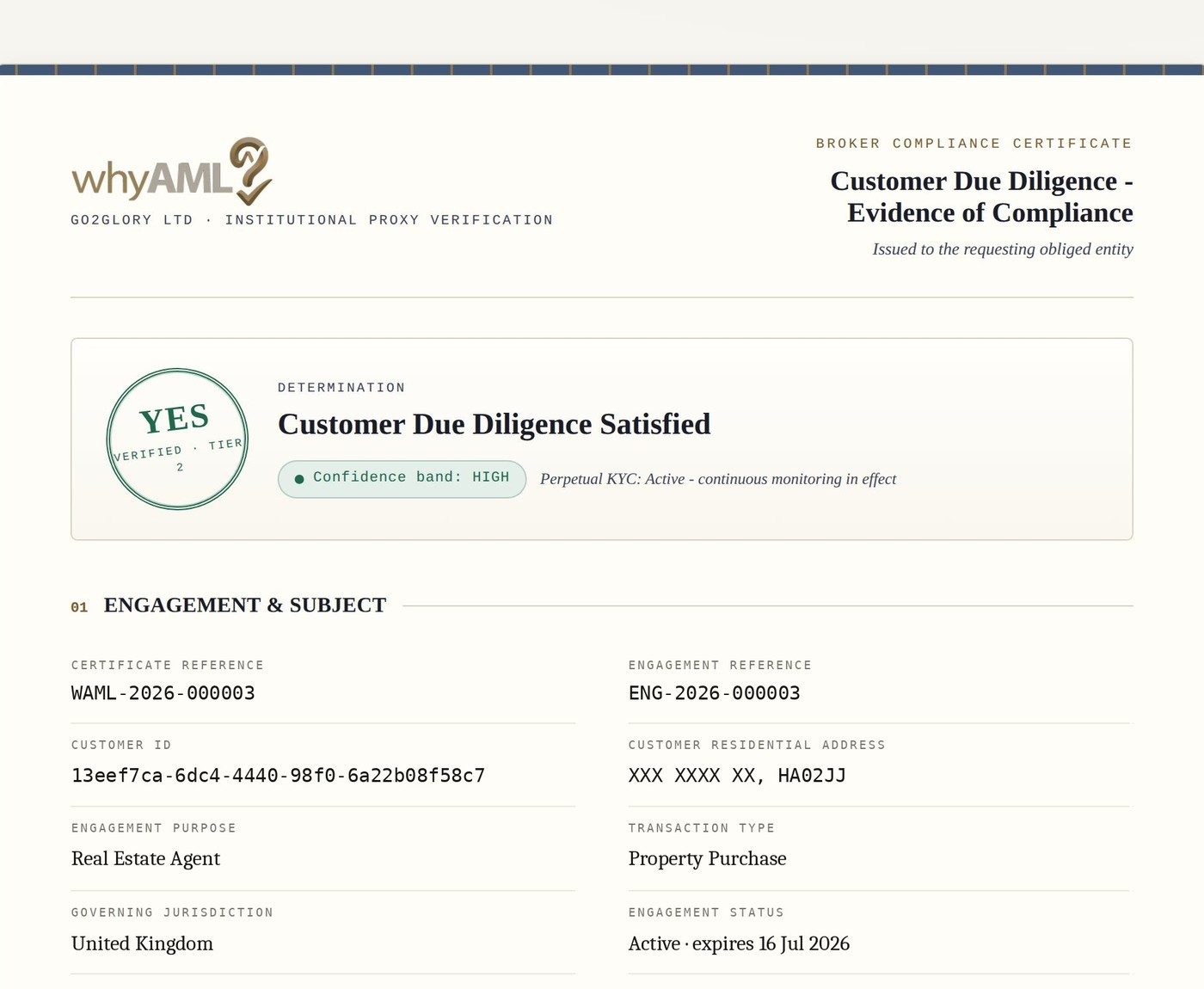
We verify who paid you and we settle the invoice. Source of funds judgement, affordability and the broader picture stay where they belong, with you. We never hold your client's money, and we never hold a document, because there isn't one.
funds held, keys held

Three things happen.
Your client does one of them.
Paste a payment link into the invoice you already send. What follows takes them under a minute.
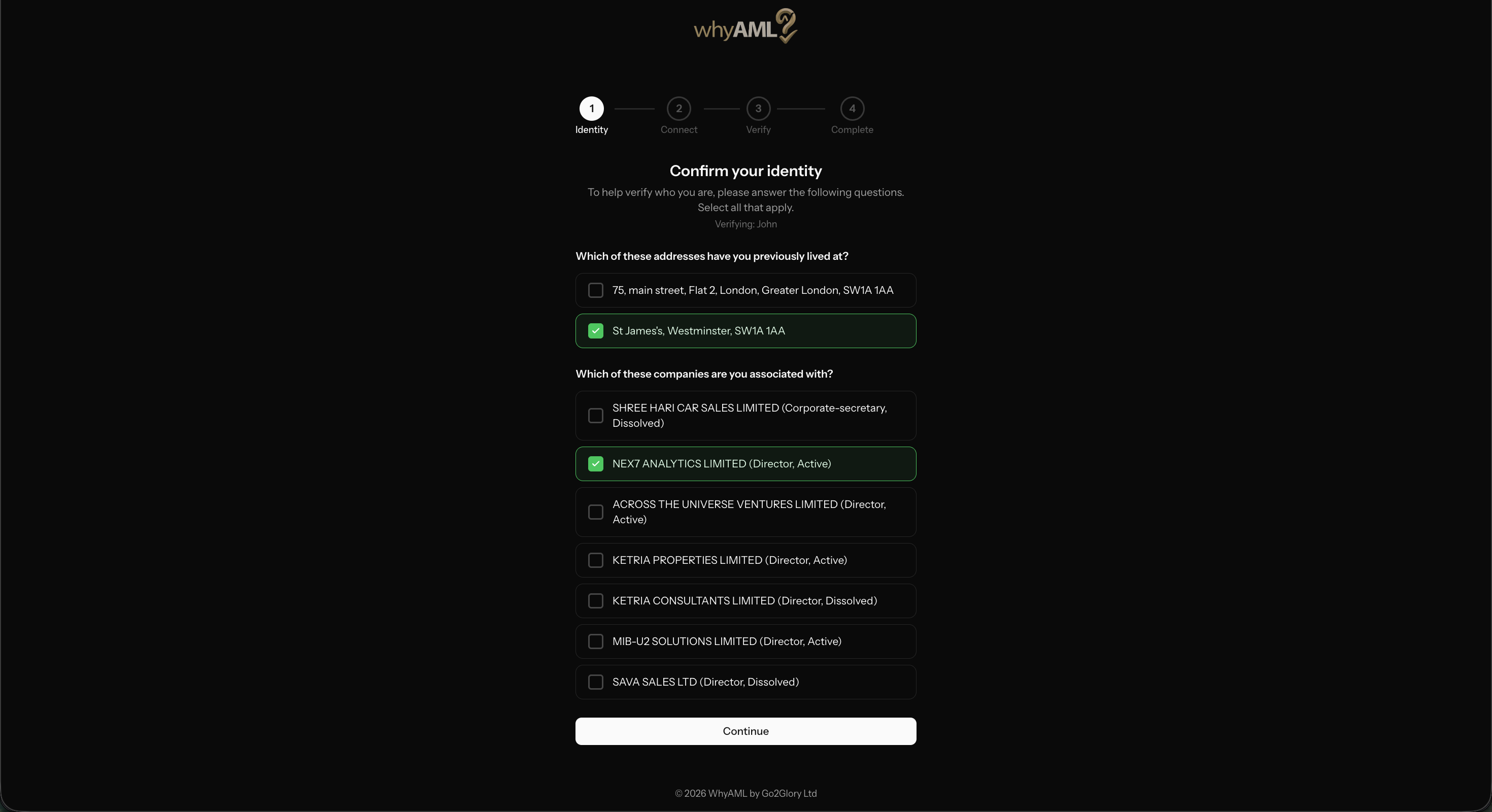
They confirm who they are
A login to their own online banking, through a certified verification service, confirms their identity from data the bank already holds. Then a few questions only they would know. No passport, no selfie, no app to download.
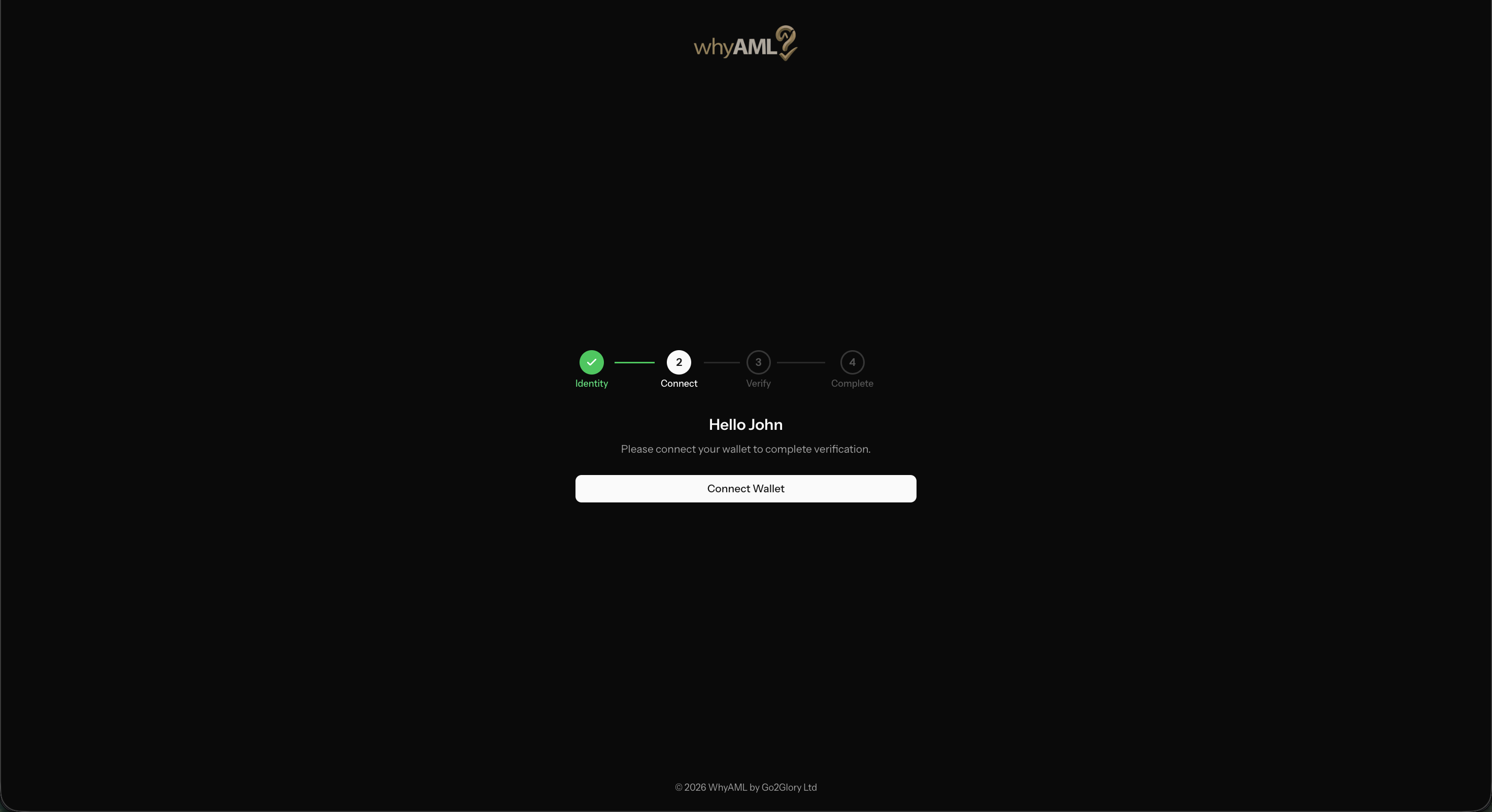
They connect the account they already have
The regulated exchange account the money comes from is the one WhyAML witnesses. Connecting it is what proves the account is theirs.
They pay, and that is the check
The money moves and the verification lands in the same instant, because they are the same event. Nothing to reconcile afterwards, because it never came apart.
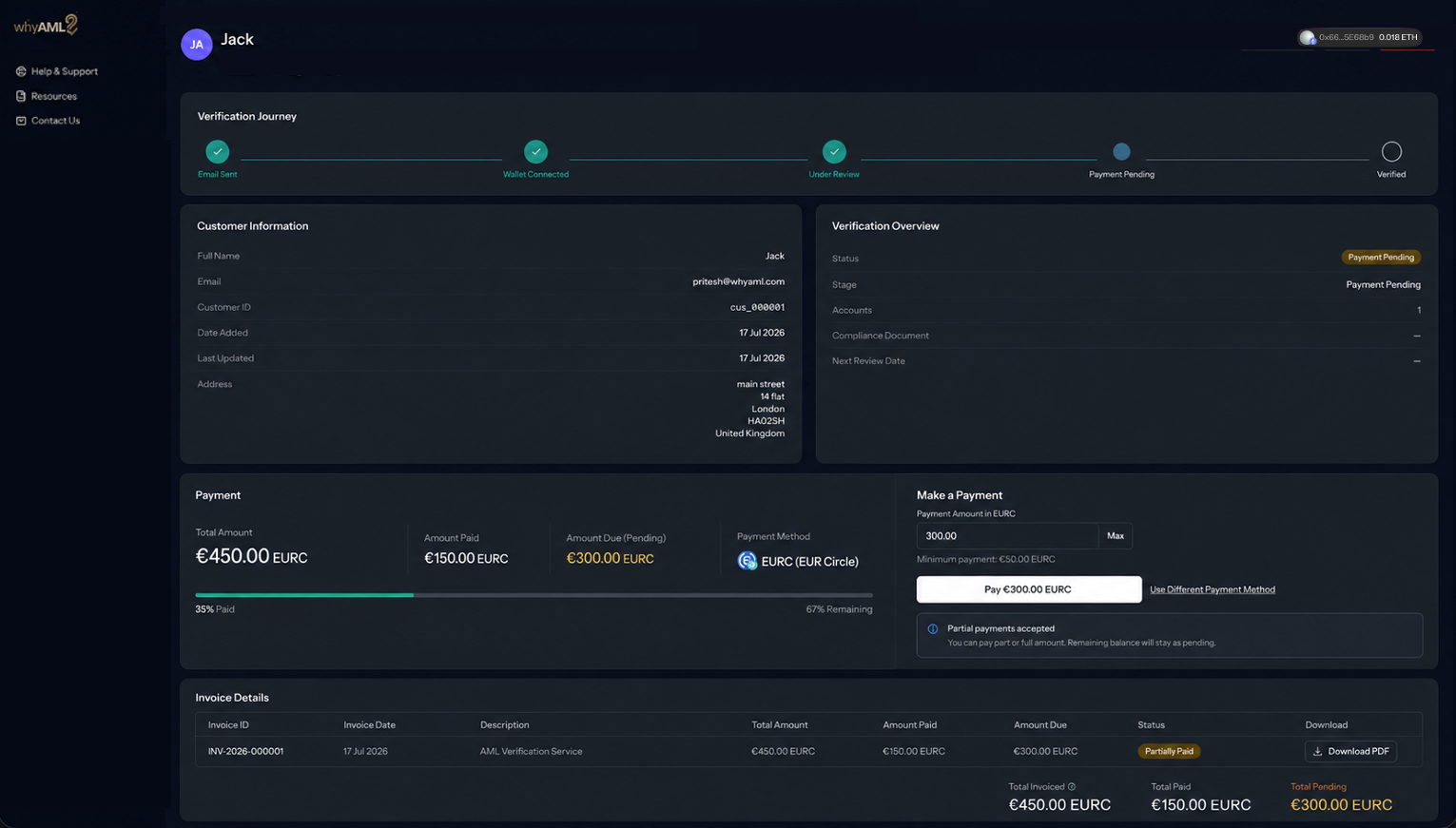
The stablecoin sits in your wallet, the invoice is marked settled, and the line is already against the right client in Xero, QuickBooks or FreeAgent. Nothing was collected, nothing was chased, and nothing is waiting for Friday.
Ninety seconds, start to finish. No IT project, no training, nothing to migrate.
This isn't just about
getting paid faster.
Faster money is the obvious one. It is also the smallest of the three.
spent reconciling
stored, or at risk
looking for an adviser
Add the rail. Keep everything else.
Nothing to install, nothing to migrate, and no contract. Buy twenty credits and see whether it fits how you already work.