You're not a small part of the economy.
You ARE the economy.
5.7 million firms. 16.9 million workers. £2.8 trillion of turnover.
So why do the rules treat you like Barclays?
Every third person you meet earns their living from a small firm. Sole traders, family businesses, two-person agencies - they're the backbone of the UK workforce, not the margin.
Source: Business Population Estimates 2025, Department for Business and Trade.

More than half of every pound the UK business economy produces flows through small firms. Barclays, HSBC, and the FTSE 100 combined generate less turnover than the 5.7 million small firms under "the same rules".
Source: Business Population Estimates 2025, Department for Business and Trade.

Almost every new job, every new product, every new export since 2010 came from a small firm. You are where the economy grows. And yet the compliance rules treat you like you have the same resources as Barclays, the same budget as Coinbase, the same team of lawyers as Kraken.
Source: Business Population Estimates 2025, Department for Business and Trade.






WhyAML works with any FCA-regulated institution that has performed KYC.
Logos shown for reference. WhyAML is not affiliated with or endorsed by these institutions.
Same rules. Different reality.
The law calls everyone an "obliged entity." But look at the difference.

$78M compliance budgets. 2,500-strong AML departments. The regulations were written for them. They built themselves to meet them.
Owner is also admin and compliance. No legal team on retainer. No enterprise system. Same rules apply.

Same fines. Same liability. Same regulations. Different reality.


Source: HMRC enforcement data, April - September 2025.
The rules were meant to protect people.
They did the opposite.
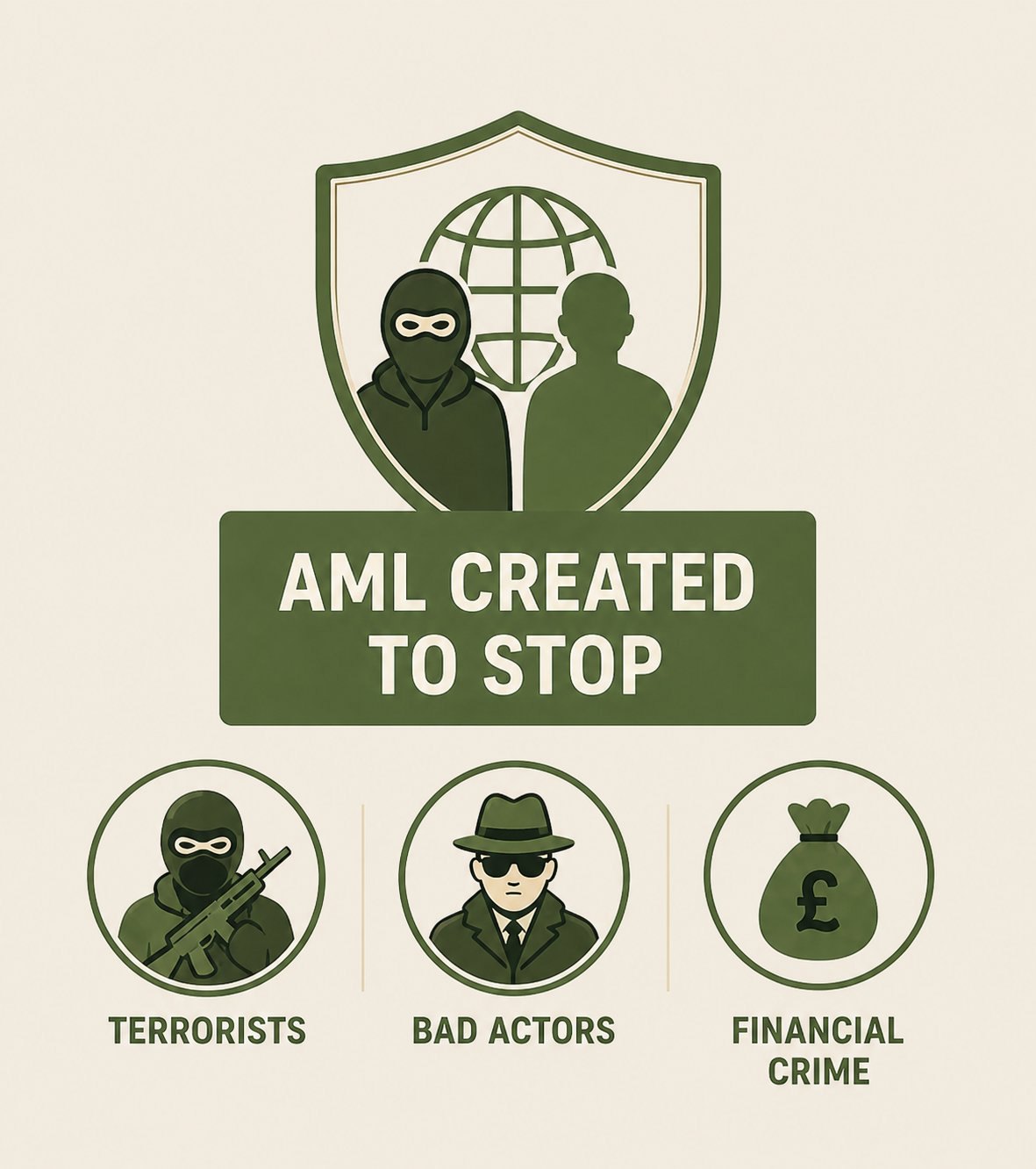
Rules written to stop criminals.
Anti-money laundering exists for good reasons. To stop criminals from cleansing their money. This is serious. This matters.

Collect everything. Store it all.
The rules required 5.7 million small firms to collect passports, utility bills, and proof of address. Store them for five years.

Each one a target.
Across tens of thousands of regulated offices, filing cabinets, email folders, and local drives are stuffed with sensitive identity documents. Each one a target. Each one a honeypot for hackers.
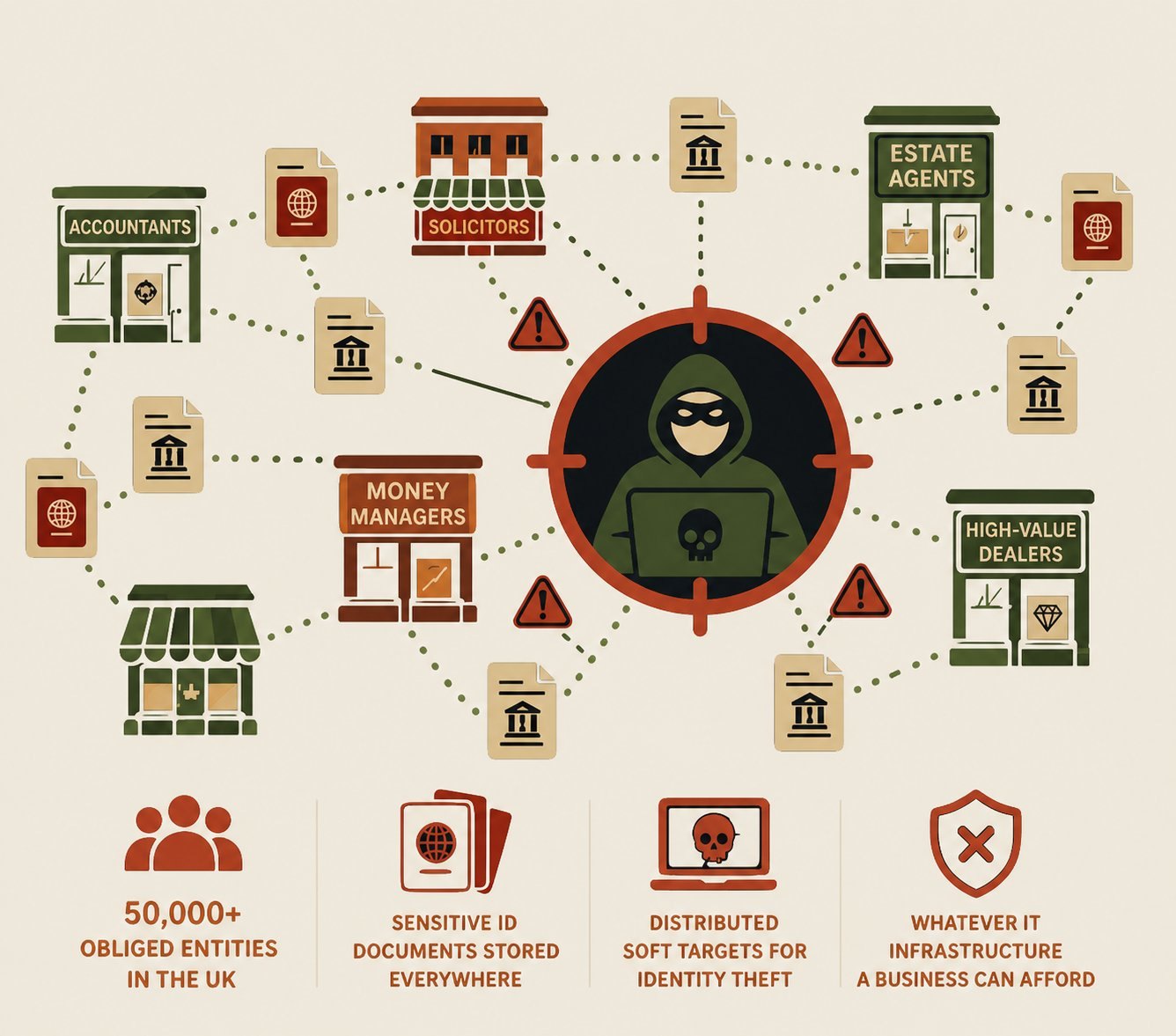
Stolen. Every year. Growing.
140 million UK files breached since 2013 - twice the UK population. £4 billion stolen every single year, growing every year. Real lives. Real families. Real fraud investigations. All because the rules told small firms to hoard documents they never needed to keep.
Sources: ICO UK breach data, UK Finance Annual Fraud Report, HMRC MLR register.
What if you didn't have to collect
documents at all?
Coinbase already verified your client. Kraken already verified your client. Their bank already verified your client. Their proof belongs to them - and the law agrees.
Coinbase already verified your client. Checked the passport. Confirmed the address. Matched the face. Spent millions making sure that person is real.
per year
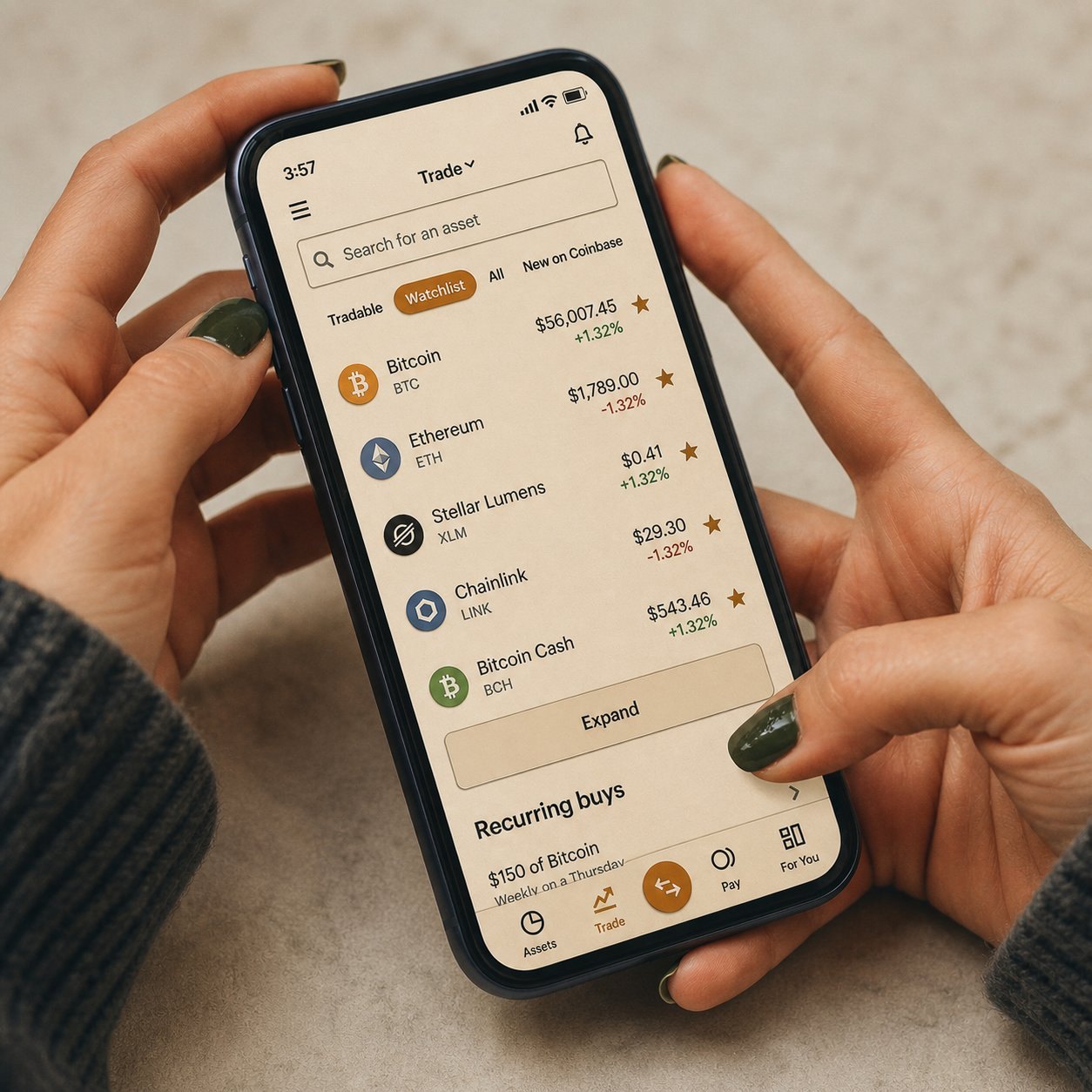
The proof already exists. A regulated institution has done the verification to banking standards. Their proof belongs to your client - not to your records.
to store or secure

You must verify identity using a "reliable source which is independent of the person." A regulated financial institution that already verified your client is exactly that source - by law, the most independent and reliable one there is.
methodology satisfied

Regulation 19(4)(c) permits you to adopt new technology without DVS certification, provided you document your risk assessment. WhyAML provides the Technological Due Diligence Pack - you attach it to your file and you're covered.
with every account

Identity verification under Reg 28. That is the verification universe. Source of funds, affordability, credit checks, broader financial picture - those remain your professional judgment. We do the one thing every other product makes complicated. And we do it completely.
done completely

Simple and elegant on top.
Sophisticated underneath.
Four steps for your client. Institutional-grade compliance underneath.
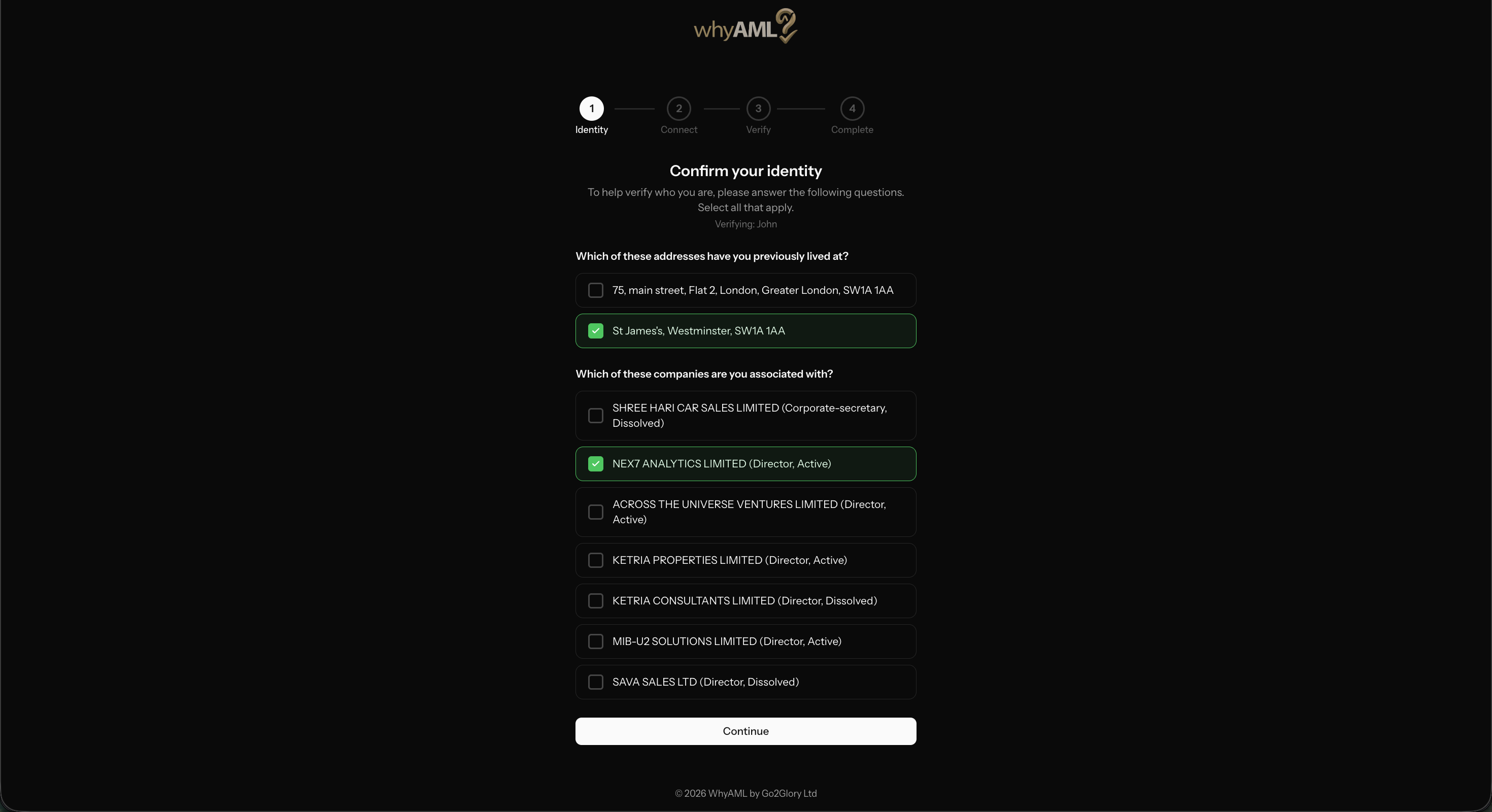
Your client answers questions only they can answer. Where they've lived. Companies they've been director of. No passport. No selfie.

They link their verified institutional account. The institution did the KYC. WhyAML proves they own it.
Below the line: a confidence engine called G-RADE™.
Four signals from seven. None of them fakeable by AI.
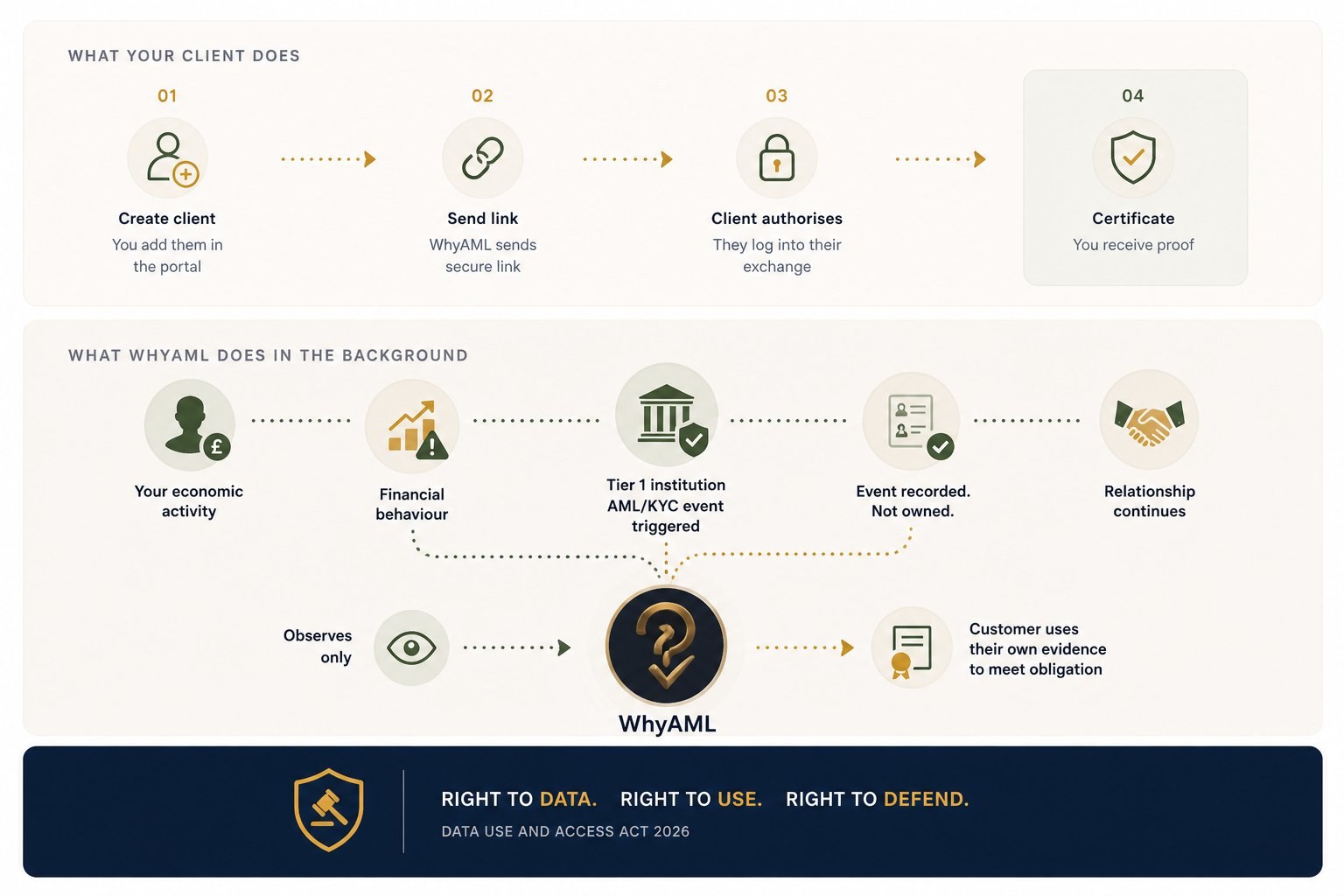
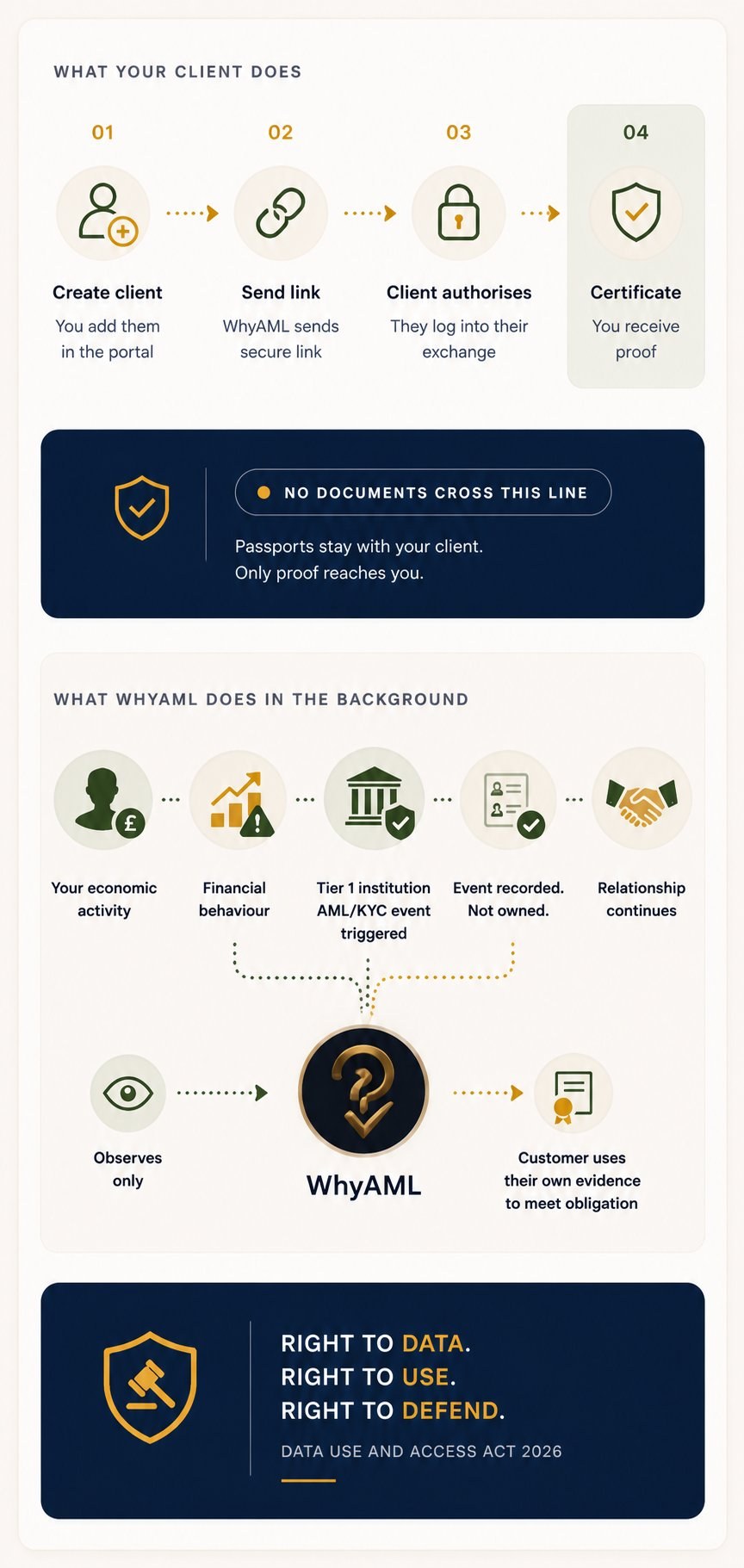
Zero documents collected. Zero PII stored.
The institution already verified your client - WhyAML proves it.
One check. Two records. Zero documents stored.
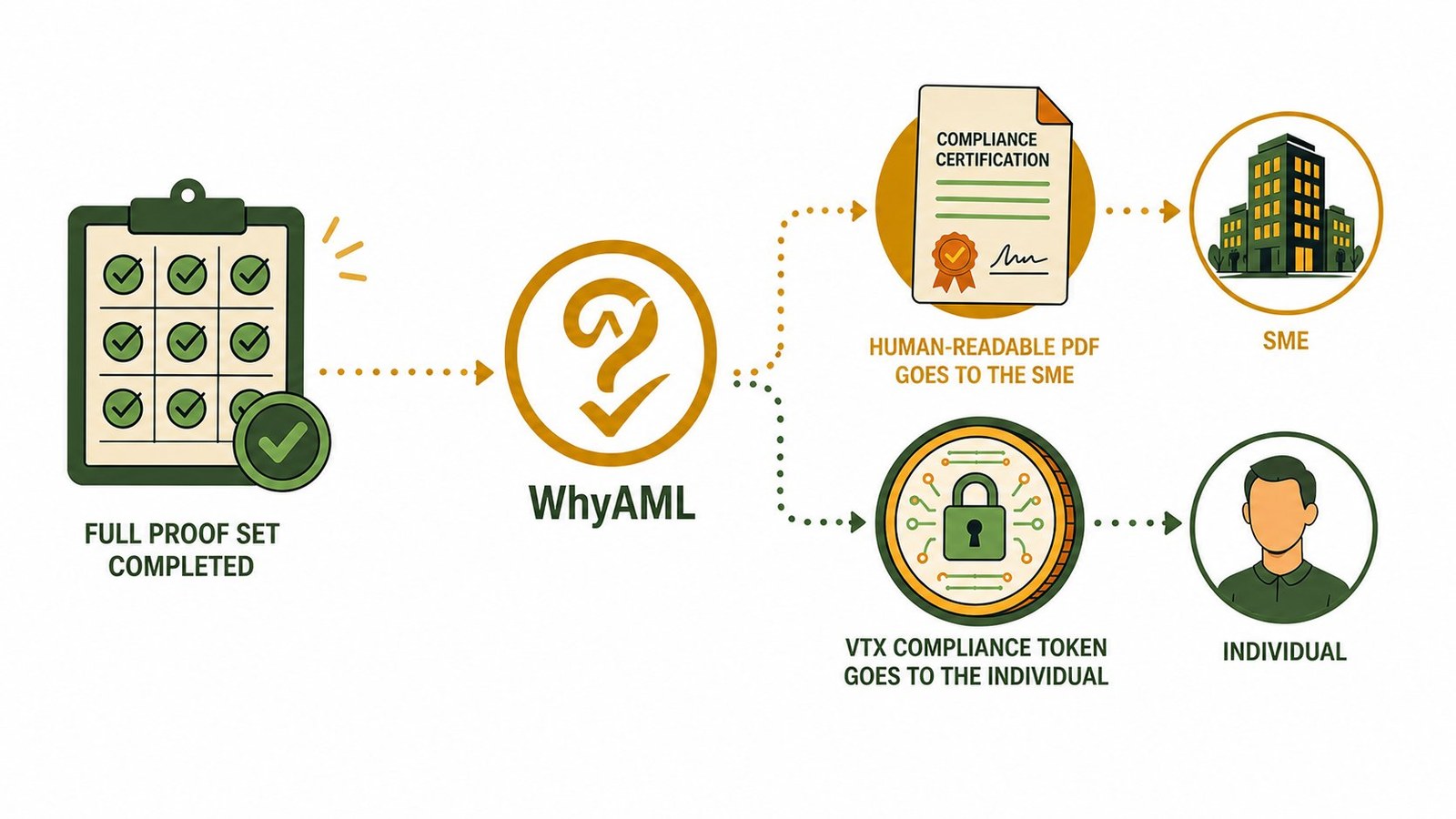
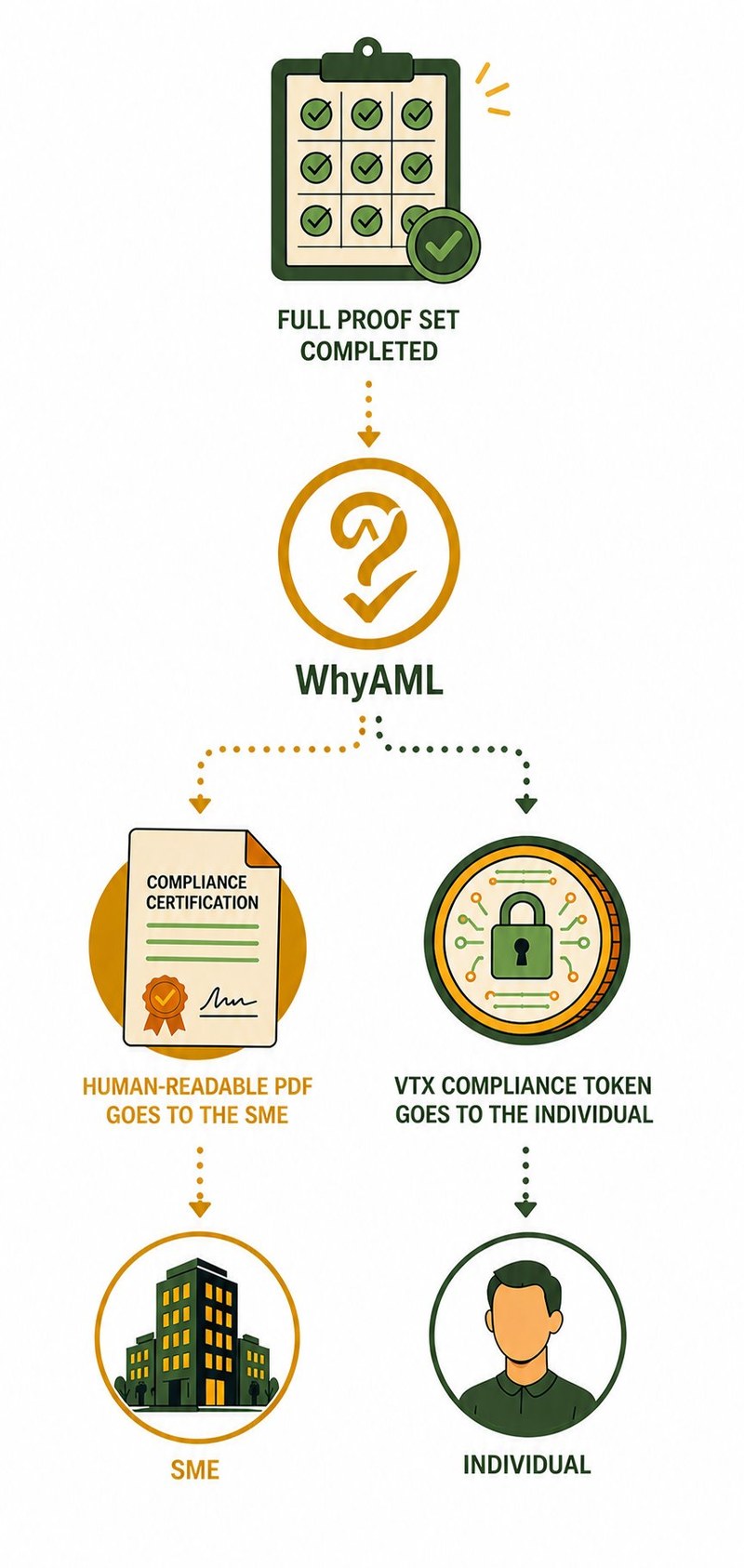
The Compliance Certificate is the human-readable PDF the firm keeps for audit.
The Compliance Token is the on-chain record the client owns and can re-use.
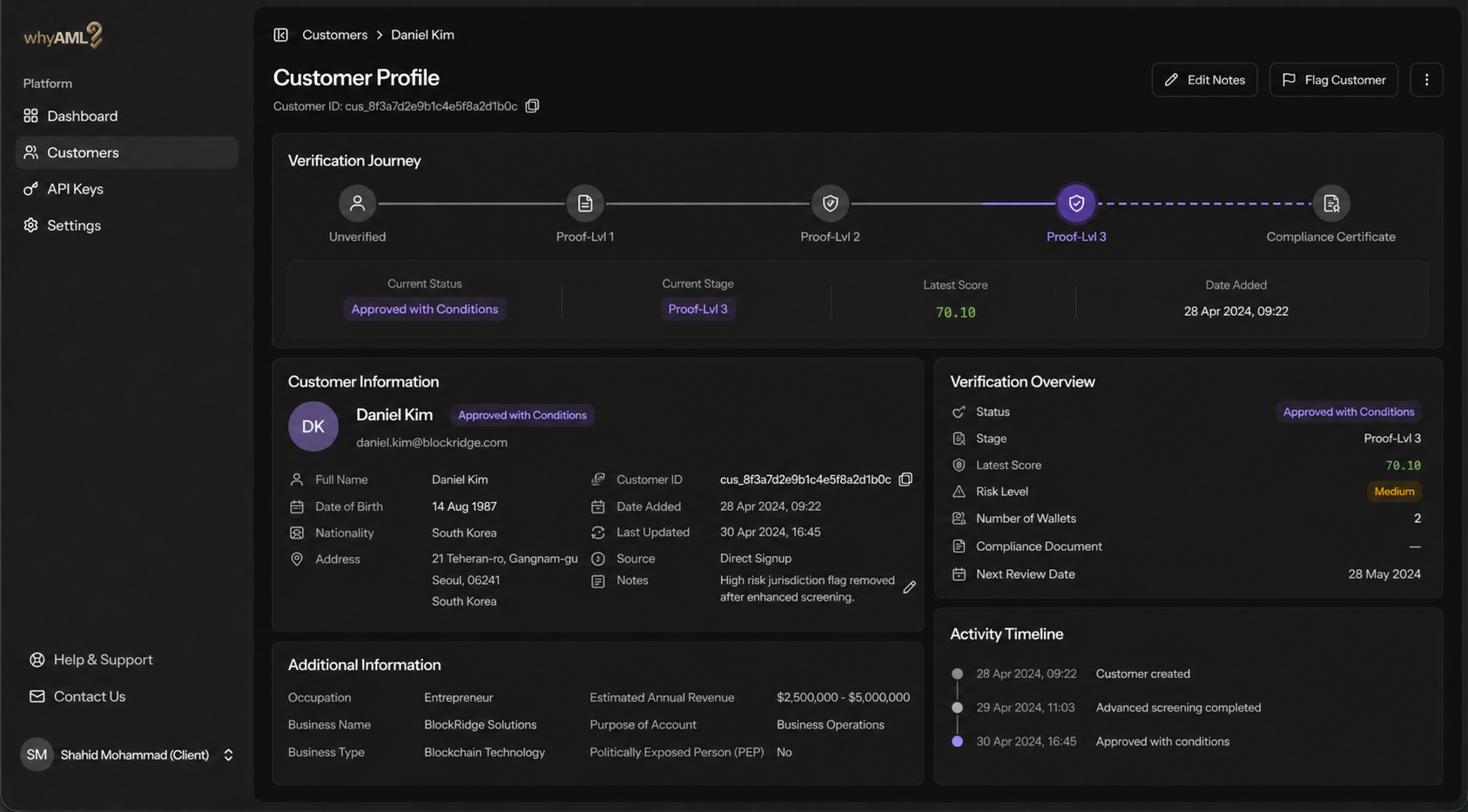
Daniel Kim. Approved with conditions. Risk level recorded. Activity timeline kept. Ready for the next HMRC inspection - no filing cabinet required.
The institution did the verification. WhyAML proves it.
Ongoing checks run automatically - you're alerted only if something changes.
Every identity system has a trade-off.
Once you hold a passport scan, you're a target.
A face is a key the client can't change.
Your client says it. You write it down. HMRC doesn't accept it.
WhyAML doesn't take any of those things.
WhyAML's Witness Model: we verify your client controls a verified account at an institution that already did the work to banking standards.
Different trade-offs. We think this trade is worth making.
This isn't just about your business.
Your firm should be a sanctuary for your clients. Not a data store for hackers. Every account opened with us closes one of 5.7 million doors that criminals use today.
stored on your servers
from day one
Ready to switch?
336 firms were fined for AML failures in six months. There's a different way. Open an account and start verifying clients in 5 minutes.